
Power adapter docking Station Laptop Multifunctional Converter Splitter accessories
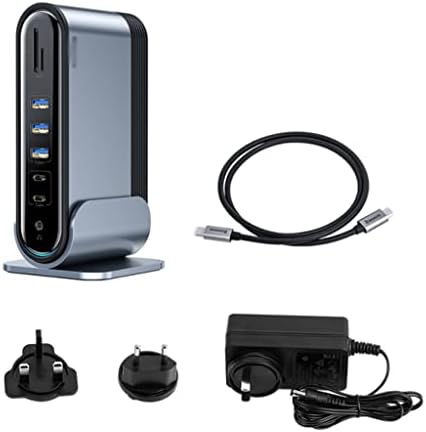
In the evolving landscape of mobile computing, the need for a centralised, powerful connectivity hub has never been greater. The Power Adapter Docking Station Laptop Multifunctional Converter Splitter Accessories represents a category of device designed to transform a single laptop port into a comprehensive workstation. This analysis provides a detailed, specification-focused examination of this product, helping you understand its potential role in your setup. We will dissect its features, discuss realistic performance expectations, and guide you on what to look for to ensure it meets your specific needs, all based on the available product information.
Quick Specifications Table
| Specification | Details |
|---|---|
| Product Type | Multifunctional Docking Station / Converter Hub |
| Primary Function | Port Expansion & Power Delivery |
| Key Connectivity | Multiple USB ports, Video Output (HDMI/DisplayPort), Ethernet, SD/TF Card Readers, Audio Jack |
| Power Delivery (PD) | Integrated (Specific wattage to be confirmed from listing) |
| Host Connection | USB-C (Specific protocol e.g., Thunderbolt to be confirmed from listing) |
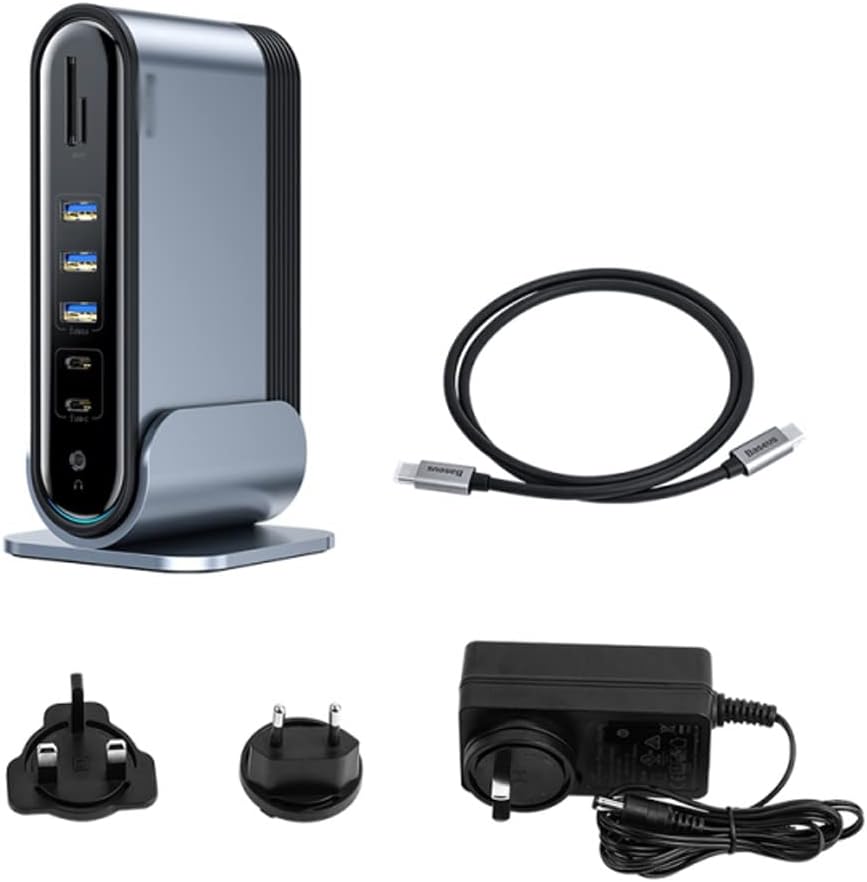
| Included Accessories | Power Adapter, USB-C Host Cable (Specifics to be verified from listing) |
| Model Number | To be confirmed from the specific product listing |
Key Features
This multifunctional docking station is engineered to address several common challenges for laptop users. Its core proposition is consolidation, aiming to replace a tangle of individual dongles and chargers with a single, neat solution. The integrated power delivery is a significant feature, potentially allowing you to charge your laptop through the dock itself, freeing up its original power port. The array of ports modern and legacy options, catering to peripherals like external monitors, wired networks, storage devices, and audio equipment. This transforms a minimalist laptop into a desktop-style hub with minimal plug-and-unplug hassle.
Design and Build Considerations
Based on its category, the design of such a docking station prioritises functionality and desk space efficiency. The form factor is likely compact, intended to sit neatly on a workspace. Build materials, often a combination of aluminium and plastic, influence both durability and heat dissipation. The placement and spacing of ports are crucial; a well-considered layout allows for simultaneous use of multiple adapters without blocking adjacent ports. The length and quality of the included host cable are also important, determining how flexibly you can position your laptop relative to the dock. A non-slip base is a common feature to prevent the unit from sliding during use.
Performance Expectations
When evaluating a device like this, performance is defined by reliable connectivity and stable power delivery, not processing speed. For data transfer, performance will be governed by the standards of the USB ports (e.g., USB 3.2 Gen 1, USB 2.0) as confirmed in the listing. Users can expect efficient file transfers to external drives and responsive peripheral operation. For video output, the supported resolutions and refresh rates (e.g., 4K@60Hz, 1080p@120Hz) will dictate the clarity and smoothness of the extended or mirrored display. The power delivery capability must match or exceed your laptop's charging requirements to ensure it charges effectively while docked. Network performance via the Ethernet port should provide a stable, fast wired internet connection, which is advantageous for video calls, large downloads, and gaming.
Disclosure: This review may contain affiliate links. As an Amazon Associate, I earn from qualifying purchases—at no extra cost to you.
Pros and Cons
Based on the typical profile of this product category, here is a balanced assessment of its potential advantages and limitations.
- Pros: Drastically reduces cable clutter on the desk. Offers single-connection convenience for docking and undocking a laptop. Integrates power delivery to simplify charging. Expands connectivity options for laptops with limited native ports. Can support a multi-monitor setup depending on specifications. Often provides a dedicated, fast Ethernet port for reliable networking.
- Cons: Performance is contingent on the host laptop's port capabilities (e.g., USB-C vs. Thunderbolt). High-resolution multi-monitor setups may have specific bandwidth limitations. May require its own external power brick, adding to the power outlets needed. The specific combination of ports may not perfectly match every user's unique set of peripherals.
Comparison with Similar Products
When considering this multifunctional converter splitter, it's useful to compare it to common alternatives. A basic USB-C hub is more portable and often cheaper but typically lacks integrated power delivery and may offer fewer or lower-bandwidth ports. A full-featured Thunderbolt dock offers maximum bandwidth for the fastest data transfers and highest-resolution multi-display support, but usually at a significantly higher price point. This product sits in the middle, aiming to offer a robust set of features including power delivery, which a basic hub lacks, at a potentially more accessible price than a top-tier Thunderbolt solution. It makes the most sense for users who need reliable expansion and charging from a single connection but may not require the absolute peak bandwidth for professional-grade video editing or extreme multi-tasking across several high-resolution displays.
Buying Guide
To determine if this docking station is right for you, consider your primary use case. For the home office professional, the key factors are reliable video output for a second monitor, stable Ethernet, and the ability to connect a keyboard, mouse, and webcam simultaneously. Students and general users will benefit from the card readers for cameras, multiple USB ports for peripherals, and the convenience of a single docking point. Creative users must pay close attention to the supported video output resolutions and data transfer speeds for external storage. Crucially, verify that your laptop's USB-C port supports the necessary functions (like DisplayPort Alt Mode and Power Delivery) for the dock to work as intended. Not all USB-C ports are created equal.
Key Things to Verify Before Buying
Before making a purchase decision, it is essential to consult the official product listing for the most accurate and up-to-date information. Specifications can vary between models and batches. Please confirm the following details directly on the Amazon product page:
- Exact Power Delivery Wattage: Ensure it meets or exceeds your laptop's charging requirements.
- Video Output Specifications: Check the maximum supported resolution and refresh rate for each video port (e.g., HDMI 2.0 vs 2.1).
- Data Transfer Standards: Verify the speed of each USB port (e.g., USB 3.2 Gen 2 at 10Gbps).
- Compatibility List: Look for any mentioned compatibility notes with specific laptop brands or models.
- Included Components: Confirm exactly what is in the box (e.g., type and length of cables, power adapter).
- Warranty Information: Note the duration and terms of the manufacturer's warranty.

Frequently Asked Questions
Does this docking station charge my laptop?
Most models in this category feature Power Delivery (PD). However, the wattage must be sufficient for your specific laptop model. A 65W or 100W PD output is common, but you must verify the exact rating on the product listing and cross-reference it with your laptop's power requirements.
Can I connect two external monitors?
This depends entirely on the specific model's capabilities and your laptop's graphics support. Some docks support dual-monitor output through a combination of HDMI and DisplayPort ports, often at specific resolutions. The product listing should state the multi-monitor support capabilities clearly.
Will it work with my non-USB-C laptop?
This device is designed primarily for laptops with a USB-C port that supports data, video, and power. If your laptop only has older ports (like USB-A or HDMI), you would likely need a different type of hub or adapter, unless the dock itself includes a legacy host connector, which is uncommon.
What is the difference between this and a Thunderbolt dock?
The main difference is bandwidth and guaranteed performance. Thunderbolt is a specific, high-performance protocol that offers faster data transfer speeds (typically 40Gbps) and more robust support for high-resolution displays and daisy-chaining. This docking station likely uses a standard USB-C connection with DisplayPort Alt Mode, which is still highly capable but may have bandwidth limitations for the most demanding setups.
Do I need to install any drivers?
For basic functions like USB ports, video output, and Ethernet, most modern operating systems (Windows, macOS, Chrome OS) should recognise the dock automatically. However, for advanced features or specific functionality, the manufacturer may recommend downloading drivers or firmware, which would be detailed in the product manual or listing.
Final Verdict
The Power Adapter Docking Station Laptop Multifunctional Converter Splitter Accessories represents a pragmatic solution for users seeking to enhance their laptop's connectivity and simplify their desk setup. By integrating power delivery with a comprehensive selection of ports, it addresses the core needs of productivity-focused users, students, and hybrid workers. Its value proposition is strongest for those with modern USB-C laptops who want a single point of connection for charging, networking, peripheral expansion, and external display support
Disclosure: This review may contain affiliate links. As an Amazon Associate, I earn from qualifying purchases—at no extra cost to you.