
Power adapter docking Station Laptop Multifunctional Converter Splitter accessories
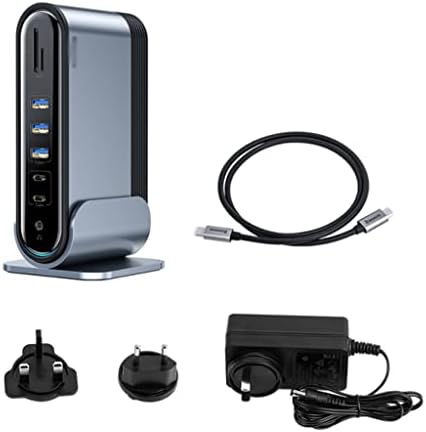
For professionals and students reliant on a laptop, a cluttered desk and a tangle of dongles can hinder productivity. A dedicated docking station aims to streamline this setup, providing a single connection point for monitors, peripherals, and power. This analysis examines the Power Adapter Docking Station Laptop Multifunctional Converter Splitter Accessories, a product designed to consolidate connectivity. Our focus is on a detailed, specification-based assessment to help you determine if this hub aligns with your workflow needs for 2026 and beyond.
Quick Specifications Table
| Specification | Detail |
|---|---|
| Product Type | Laptop Docking Station / Hub with Power Delivery |
| Key Function | Multifunctional connectivity expansion and laptop charging |
| Primary Connection | USB-C (assumed, based on product naming conventions) |
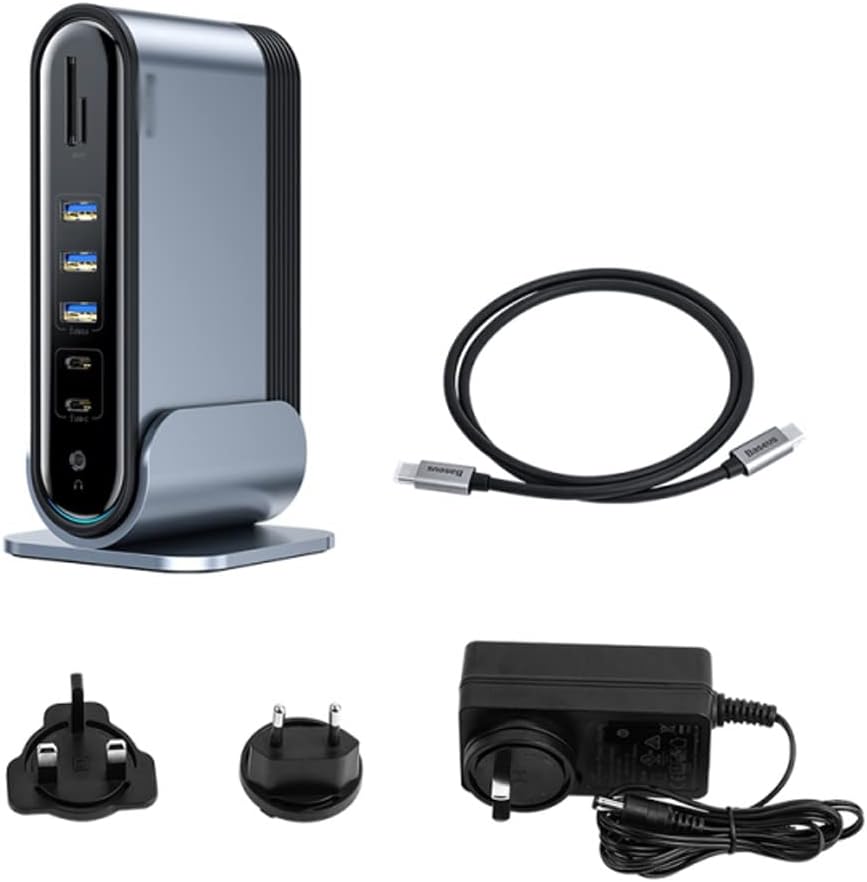
| Included Accessories | Power adapter, USB-C cable (assumed standard for category) |
| Model Number | To be verified on the product listing |
Key Features
Based on its descriptive name, this device consolidates several core functionalities into one unit. The central proposition is the combination of a power adapter and a multiport dock. This means it is designed to deliver power to your laptop via USB-C Power Delivery (PD) while simultaneously offering a range of ports for external devices. Typical features for such a product include video outputs like HDMI or DisplayPort for external monitors, USB-A ports for legacy peripherals, and often an Ethernet port for stable wired networking. The "multifunctional converter splitter" terminology suggests it converts a single laptop port into multiple, diverse connection types.
Design and Build Considerations
A docking station of this type is typically a compact, desktop unit designed to remain stationary on a workspace. The build material is often a combination of plastic and metal for heat dissipation. A key design consideration is the placement and spacing of ports; they should be logically arranged and not too close together to allow all ports to be used simultaneously with various-sized connectors. The integrated power adapter suggests the unit will have a built-in power brick, which can contribute to its overall size and weight compared to slimmer, bus-powered hubs. For user convenience, a well-designed dock will have clear status indicators for power and data activity.
Performance Expectations
Performance for a docking station is defined by the stability and bandwidth of its connections. A model with this functionality is expected to provide reliable power delivery to compatible laptops, supporting charging during intensive use. For video output, performance is contingent on the supported version of the video protocol (e.g., HDMI 1.4, 2.0). A capable dock in 2026 should support at least a single high-resolution external display, such as 4K at 60Hz, which is suitable for office work, content consumption, and general productivity. Data transfer speeds via its USB ports will depend on the standard (e.g., USB 3.2 Gen 1, Gen 2), with faster ports being appropriate for transferring large files or backing up data. Network performance via a built-in Ethernet port should provide a stable, low-latency connection superior to typical Wi-Fi, beneficial for video calls and large downloads.
Pros and Cons
Evaluating the implied design of this all-in-one docking station reveals a clear set of advantages and potential trade-offs.
Disclosure: This review may contain affiliate links. As an Amazon Associate, I earn from qualifying purchases—at no extra cost to you.
- Pros: The primary advantage is desk consolidation. Combining power delivery and multiple ports into one device reduces cable clutter and frees up wall sockets. It creates a true single-cable docking solution for compatible laptops, enhancing workflow efficiency. The inclusion of a power adapter means it can deliver higher, sustained power to the laptop compared to bus-powered hubs, which is crucial for power-hungry models.
- Cons: The integrated power supply likely makes the unit larger and less portable than a simple hub. Its fixed cable and adapter mean it is less versatile for travel. Performance is entirely dependent on the specific protocols and bandwidth of its chipset and ports, which must be verified. There is also a potential single point of failure; if the dock malfunctions, both connectivity and charging are affected.
Comparison with Similar Products
When considering a docking solution, it's useful to compare this type of product with common alternatives. Standard multi-port USB-C hubs are more portable and often cheaper but usually lack the robust power delivery needed to charge a laptop under load; they are best for adding ports on the go. Traditional docking stations from laptop manufacturers often offer deeper system integration and guaranteed compatibility but can be significantly more expensive. This Power Adapter Docking Station sits in a middle ground, aiming to offer robust charging and substantial port selection at a potentially more accessible price point than first-party docks. It makes the most sense for users who need a permanent, powerful desk setup for a single laptop and value the simplicity of one integrated unit.
Buying Guide
Selecting the right docking station requires matching its specifications to your specific needs. Follow this decision framework:
- Identify Your Laptop's Capabilities: First, confirm your laptop has a USB-C port that supports both data transfer and Power Delivery. Check your laptop's manual for its maximum power input requirements.
- List Your Peripheral Needs: Tally the devices you connect daily. How many monitors? What resolution and refresh rate? How many USB devices (keyboard, mouse, webcam, external drives)? Do you need wired Ethernet or an SD card reader?
- Match Power Requirements: Ensure the dock's power adapter output (e.g., 100W) meets or exceeds your laptop's charging needs to ensure it charges even under full CPU/GPU load.
- Prioritise Port Specifications: Look beyond port count. For monitors, verify the supported resolution and refresh rate for each video output. For USB ports, note their speed (e.g., 5 Gbps, 10 Gbps).
- Consider Future-Use: While avoiding speculation, consider if your needs might grow. Choosing a dock with a spare port or higher-bandwidth connections can provide headroom.
Key Things to Verify Before Buying
To ensure complete compatibility and avoid disappointment, diligently check the following on the official Amazon product listing before purchasing:
- Exact Port Configuration and Specifications: Confirm the type, number, and version of every port (e.g., HDMI 2.0, USB 3.2 Gen 2, Gigabit Ethernet).
- Power Delivery Wattage: Verify the exact wattage output of the integrated power adapter (e.g., 65W, 96W, 100W).
- Supported Display Configurations: Check the manufacturer's stated maximum supported resolution and refresh rate for single and multi-monitor setups.
- Compatibility List: Look for any mentioned compatible laptop brands and models, though a standard USB-C PD dock should work with many systems.
- Included Accessories: Confirm the length and type of the included USB-C cable, and ensure the correct regional power plug is included.
- Warranty and Support: Note the warranty period and the manufacturer's contact information for support.

Frequently Asked Questions (FAQs)
Does this docking station charge my laptop?
Yes, based on its name and description, a primary function is to deliver power to your laptop via USB-C Power Delivery. You must verify the wattage on the product listing to ensure it is sufficient for your specific laptop model.
Can I connect two external monitors to this dock?
This depends entirely on the specific model's hardware. Some docks support dual monitors via a combination of HDMI, DisplayPort, or USB-C video outputs, while others may only support a single display. The product listing should explicitly state the multi-monitor capabilities and the required connections.
Will it work with my non-USB-C laptop?
No. This type of dock is designed to connect via a USB-C port that supports both data and power. If your laptop only has older USB-A ports or a proprietary charging port, this dock will not be compatible. You would require a different type of hub or adapter.
Does it improve internet speed?
If the dock includes a Gigabit Ethernet port, it can provide a more stable and often faster connection compared to wireless Wi-Fi, especially in areas with poor signal strength or network congestion. It does not increase your base internet speed provided by your ISP.
Do I need to install drivers?
For basic functions like USB ports, HDMI video, and power delivery, most modern operating systems like Windows 11 and macOS will recognise the dock automatically. However, for advanced features like specific display configurations or firmware updates, you may need to install drivers or software from the manufacturer's website. Check the listing for driver information.
Final Verdict
The Power Adapter Docking Station presents a compelling solution for users seeking to declutter their workspace with a unified device. By combining a capable power adapter with a multiport hub, it targets the core need for a simple, single-cable desk setup. Its value proposition is strongest for laptop users who require sustained high-wattage charging alongside reliable connections for monitors, storage, and networking. However, its suitability
Disclosure: This review may contain affiliate links. As an Amazon Associate, I earn from qualifying purchases—at no extra cost to you.